
Edgewood Resident Lookup Records
No single official directory covers Edgewood names. Start with the custodian holding your fact. The State Department of Assessments and Taxation ties an address to a parcel card and a recorded-deed reference. The Maryland Judiciary ties a party name or case number to public case-index entries. Voter service answers a voter's own registration and polling questions. Vital records and archives impose their own age and eligibility rules. A family date may decide which channel applies. Each record confirms one narrow fact. None of them builds a complete current identity record for an Edgewood resident lookup.
| Record source | Fact it can confirm | Custodian route | Access boundary |
|---|---|---|---|
| Parcel card | Premises, mailing, parcel, deed, and assessment fields | Maryland SDAT Real Property Data Search | Informational property record, not proof of occupancy |
| Voter service | Registration, polling place, district, and local-board route | Maryland voter search | Identity inputs required; not a general directory |
| Court index | Public case number, party role, court, type, and status | Maryland Judiciary Case Search | Restricted, sealed, shielded, and expunged items create gaps |
| Vital record | Certified birth, death, marriage, or divorce-verification route | Division of Vital Records | Eligibility, identification, and statutory age rules apply |
| Historical sources | Older directory, obituary, map, or archive lead | Maryland State Archives Guide | Catalog entries and date-specific listings can be incomplete |
Match the starting point to the question. A parcel question begins with the known address, a court question with the case number, and family-history work with a date and place. Keep the trail source-specific. An owner field does not name an occupant, and a printed historical listing does not prove anyone currently lives in Edgewood.
Edgewood Court Lookup Details
Case Search moved to the Judiciary's unified public portal on March 14, 2026. Lead with the case number. No number handy? Narrow a name result by court, case type, filing date, party type, and other lawful identifiers. Harford Circuit civil records reach back to May 4, 1998. Criminal coverage starts June 21, 1999, per the Judiciary FAQ. District Court and older material vary by record and court.
The public result screen lists Case Number, Name, Date of Birth, and Party Type. It also shows Court, Case Type, Case Status, Filing Date, and Case Caption. Results sort by last name. Other columns sort too, and CSV, Excel, and XML exports are reported. Clicking a case number opens the detail view. There the case header and tabs like Party, Charge, Events, Hearings, and Documents appear. The clerk remains the source for certified copies. Public data are informational, so treat the screen as an index rather than a record.
| Case Search result field | How it helps distinguish a name |
|---|---|
| Case Number and Caption | Creates a stable record locator and shows the named matter. |
| Party Type and Court | Shows the person’s listed role and the court level. |
| Case Type and Status | Separates civil, criminal, traffic, and available categories. |
| Filing Date | Tests whether the timing fits the known person or event. |
| Detail tabs | Point to public case information, events, hearings, or documents where available. |
Exact names are the default. The Judiciary FAQ also permits a partial last-name search, built from the first character plus a percent sign. Dashes may be dropped from case numbers. These small syntax rules decide many empty results. When a search stalls, the Maryland court-record hub, the Harford Circuit Clerk, and the District Court clerk handle courthouse review, copies, certifications, and procedural questions. Federal matters are different. They run through the account-based PACER National Case Locator and the appropriate federal clerk's copy process.
Note: A missing Case Search result can reflect coverage limits, spelling, court level, shielding, sealing, expungement, or another access rule.
Edgewood Voter Lookup Inputs
The Maryland voter search checks one voter's own record. It is not a public roll of Edgewood residents. The name search demands first name, last name, date of birth, and ZIP code, while a middle initial, street number, former name, or previous ZIP can help when the record has changed. A separate polling search needs number, street, and ZIP. It returns election geography, not a named household.
The official Maryland voter lookup shows the required name and verification fields before a search starts. It can route a voter to registration, duplicate cards, polling places, districts, local boards, and sample ballots. Updates run daily, the form says. Even so, the form advises allowing time for a change to appear, and a no result or record correction belongs with the Harford County Board of Elections.
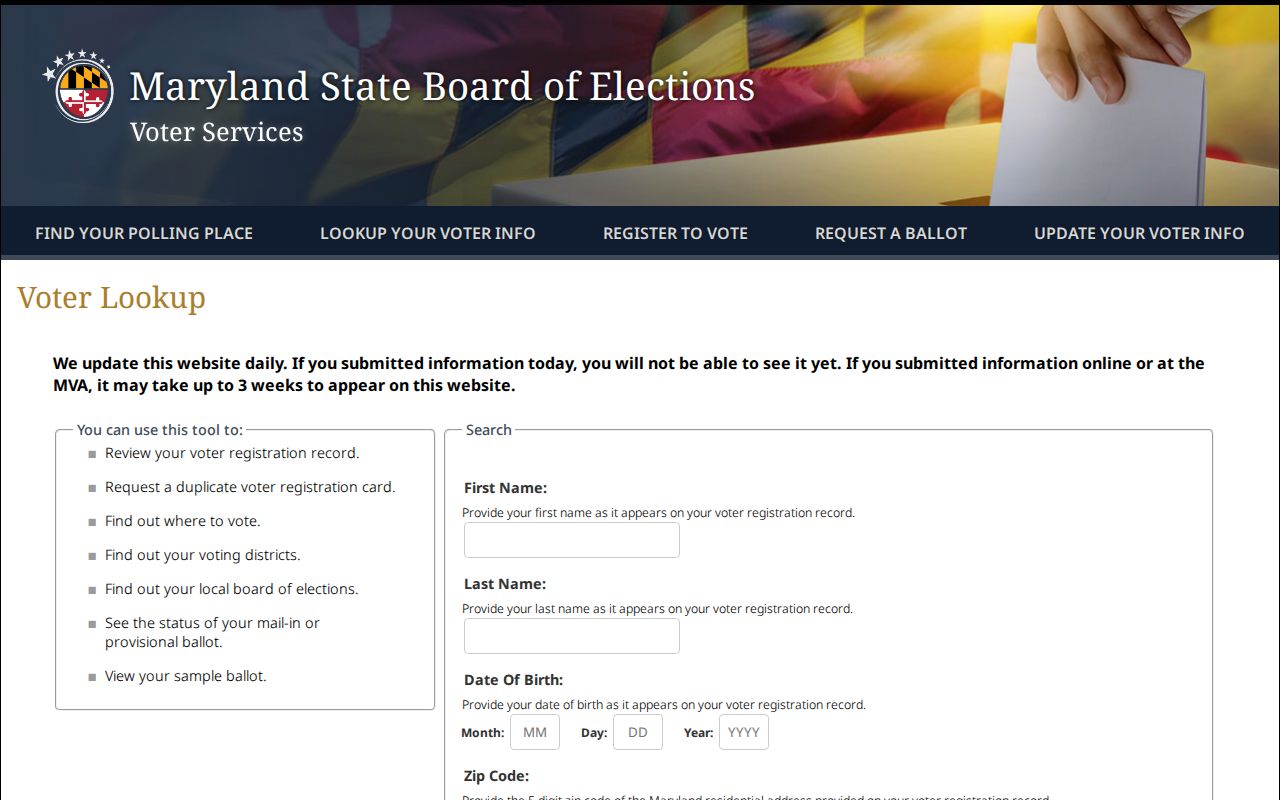
A bare name will not do. The voter service's required inputs make a name alone inadequate for any Edgewood resident lookup. The county does offer a separate voter-data request. It runs on an application, a qualification check, an oath, and restrictions under Election Law §3-506, and its precinct-and-street walking-list format serves eligible requesters rather than anyone compiling a block roster.
Verify an Edgewood Resident
Verification means testing a name against two independent facts that the record sources actually contain. Start with one specific question. A current-address question can begin with the SDAT street-address route, then move to the deed reference or Harford GIS. Court questions want a case number. Or a name with court and date. Family history works from the place and period, then the archive or vital-record path matching the record's age.
- Record the full name exactly as printed and add one independent detail, such as an address, date, case number, or place.
- Check the matching official index, keeping the result’s role separate: owner, party, voter, grantee, grantor, licensee, or next of kin.
- Compare a second source, such as parcel plus deed reference, case number plus court, or dated directory listing plus archive material.
- Request the underlying document from the clerk, archive, or vital-record custodian only when that record is needed and the requester qualifies.
- Docket
- A docket is the court’s running record of a case, including filings, events, and scheduled activity.
- Index and image
- An index helps locate a record. An image or filed copy is the document itself and may have a different access route.
- Certified copy
- A certified copy is issued by the proper custodian with official certification for a purpose that requires it.
An old address finding needs dated evidence. A modern parcel record will not carry it. For the collections that establish older locality and household context, use the Edgewood city directory materials before treating a printed line as proof of anything current.
Edgewood Vital Record Boundaries
Match the route to the record. In Maryland, birth, death, marriage, and divorce verification all run through the Division of Vital Records, which takes online orders, mail, lobby appointments, and service at local health departments. The Harford County health department in Bel Air is one local issuing point. Older material heads elsewhere: birth records stay closed for 100 years and death records for 10 under General Provisions §9-1015, and genealogical items beyond those windows fit the Maryland State Archives.
Every application asks who is requesting, the relationship or authority, subject details, payment, and delivery. Certified copies go only to eligible requesters with the right identification or proof. Death records from 2012 forward use the state route, with earlier ones and genealogy pointed toward archives. Marriage records follow the state path from 2007 forward, while older local ones may sit with the Circuit Court or the archives. A resident lookup should not dress up an entitlement-controlled form as a name-search tool.
Note: Name the record type, date range, and proper custodian rather than asking an office to assemble a person's history.
Edgewood Custody Record Limits
Custody sources each cover a different population. The Harford County Detention Center publishes no online roster search. Its public guidance points to VINE and VINELink for custody status and notifications. The state DPSCS Inmate Locator takes a first and last name. It covers DOC, Patuxent, and certain short-sentence DPSCS populations. It leaves out many Maryland detainees, and anyone released or escaped is excluded entirely.
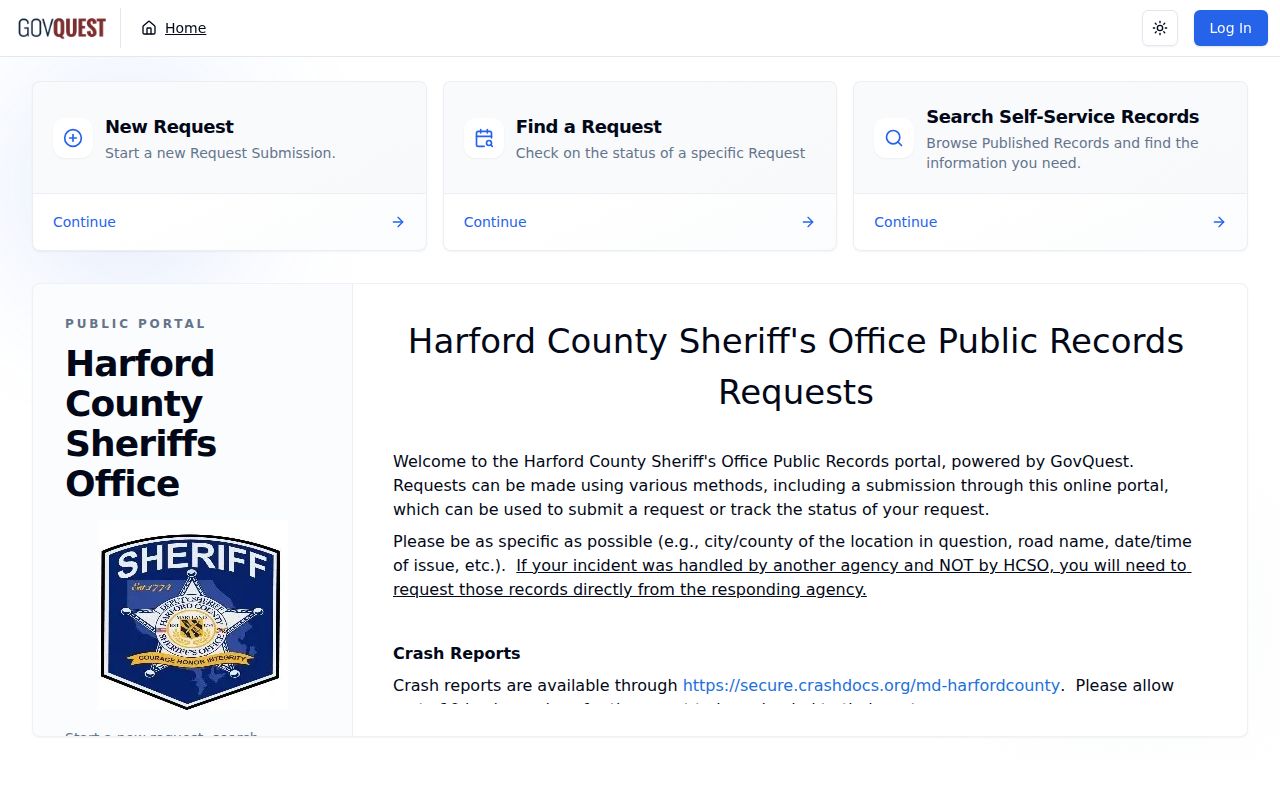
For other sheriff records, the PIA route is separate. It applies to existing releasable incident, crash, policy, and administrative material. A requester can create an account and submit and track a request. They can exchange messages with staff. Requesters download released files and pay any required fee. Juvenile arrests, child-abuse files, and similar protected material stay outside ordinary release. The portal stands apart from a detention roster, a court file, or the vital-record process.
The HCSO public-record request portal displays the account and request entry screen. It serves releasable county records.
Good record-keeping holds a response to its source. Track the request number, the date, the custodian, and any fee estimate together. One office's answer never proves what a different agency holds. The DPSCS locator presents a first-name and last-name search. It is limited to the state populations the agency describes.
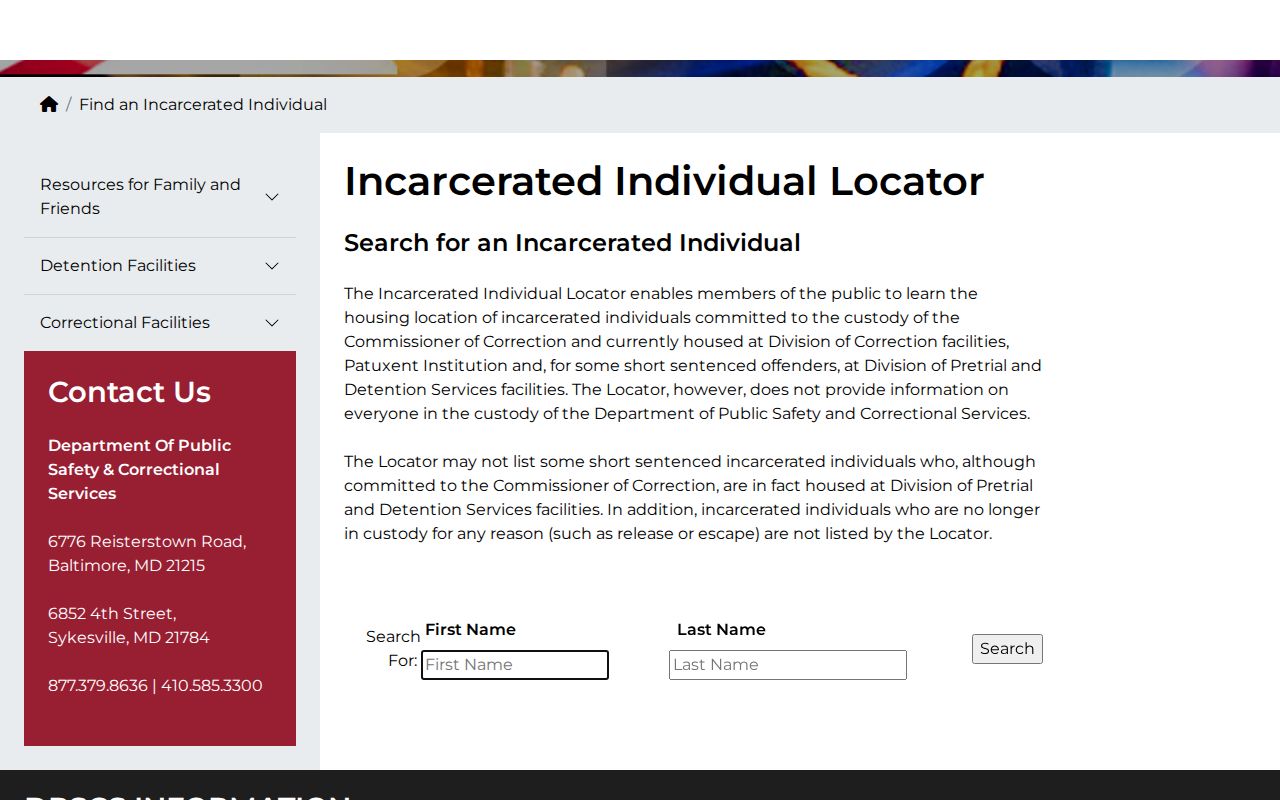
Always corroborate a locator hit. A case number, court, lawful date-of-birth context, or named facility turns a name match into something usable. A shared name alone is never positive confirmation of identity.
Edgewood Resident Lookup Requests
Maryland's Public Information Act is the fallback. It applies when an existing releasable record has no normal portal. The Office of the Attorney General PIA overview describes the two essentials. A request must identify the custodian and describe the existing record. Helpful details include a date range, record type, address, parcel, case number, or another locator. Also give the format wanted. The PIA never forces an office to answer questions or create new records.
Timing rules protect requesters. An incorrectly addressed request must be redirected within 10 working days. Production generally lands within 30 days, subject to statutory exceptions, extensions, exemptions, and fees. Under §4-206, the first two hours of search and preparation usually cost nothing. Larger record sets can carry their own charges. Court files, vital records, and voter-list rules keep their separate boundaries. Safe at Home addresses and protected law-enforcement records do too.
Edgewood Resident Lookup Safeguards
Availability depends entirely on the record. Court files can omit juvenile, adoption, CINA, shielded, sealed, and expunged matters. Emergency mental-health and extreme-risk files are protected too. A parcel field may show a record owner or a mailing address. That does not prove who actually lives there. Voter lists require a qualified request process, and the voter lookup is identity constrained. Motor-vehicle records offer no open Edgewood address source. Restricted vital records cannot be obtained by routing the ask through a different office.
Maryland Safe at Home gives eligible participants a substitute address when confidentiality matters. The Safe at Home program bars reconstructing a suppressed address from property, GIS, voter, permit, or directory data. Voter confidentiality protections do the same. When a field looks wrong, use the originating custodian's correction or appeal route. Copying an error into a combined record only spreads it.
Lawful use. Use Edgewood resident records for lawful personal, historical, civic, or records research. Do not use a result to stalk, harass, threaten, alarm, or monitor another person.
Edgewood Records Need Context
Different official sources answer different questions. A current parcel card ties an address to assessment and deed-reference fields. A deed index tracks title transactions over time. A voter result speaks to registration or polling. A court result identifies a public case record, while a dated telephone directory preserves a historical publication entry. Comparing these records can test a single fact, but stitching separate custodial holdings into a personal dossier goes beyond what any of them authorizes.
| Official record approach | Combined commercial record tools | Safer conclusion |
|---|---|---|
| Names the custodian, record date, role, and access limit | May merge records with different dates and roles | Use the source that owns the fact being checked |
| Supports a copy, correction, or records request route | May not show the source or correction path | Keep the portal URL and record locator |
| Can show a gap caused by privacy or coverage | Can make a missing or stale field look conclusive | State the gap and check the appropriate custodian |
For a wider address-based chain, the Edgewood street directory follows parcels, deeds, and related address records. It never treats a street as a list of current occupants.