
Edgewood City Directory Holdings by Date
Tracing a name through an Edgewood city directory takes patience and more than one shelf. Start small. A single old volume rarely holds the whole story. Listings hide in countywide telephone books, regional reels, and library reference collections. One office is never enough. Family researchers should fix the date first and note the locality label on every hit. Old listings describe where a household stood in print, not who lives there today. Pair each result with another dated record, such as a deed or voter roll. Trust it only then. Used that way, even scattered directory evidence becomes solid ground for a family file.
| Collection | Years | Where Held | Access |
|---|---|---|---|
| Harford County telephone directory reel | September 1960 through September 1962 | Library of Congress | Digitized page images and catalog record |
| Baltimore regional white and yellow pages reel | 1970/1971 | Library of Congress | Regional reel; verify the Edgewood page and date |
| Harford County criss-cross directories | 1966-1996 | Library of Congress guide and requested holdings | Request by directory type, place, and year |
| HCPL Maryland Room and local history | Harford and Maryland reference material | Bel Air Branch and HCPL resources | Primarily in-library reference use |
| HSHC archival and vertical files | Collection-dependent | Harford County Historical Society | Catalog lead, onsite research, or mail request |
No stand-alone Edgewood publisher run appears in the major catalogs. So start elsewhere: fix the year and source type first, then use the Harford locality index or a catalog description to spot the right Edgewood material. Regional volumes often carry the town without saying so on the spine, and that careful step keeps them from being mistaken for a dedicated local directory.
Edgewood City Directory Routes Are Regional
Historical research on Edgewood routes through Harford County custodians and Maryland repositories. The county seat is Bel Air. The local library branch, county plans, and postal label each describe a place. Each one describes a different kind of place. A telephone reel can list Edgewood beside Aberdeen, Bel Air, and other Harford localities. A county reverse directory may be arranged by street address. It may not sit under a city heading. The distinction matters. A missing stand-alone title does not mean missing evidence.
When sorting Edgewood, Harford County, from similarly named places, use the locality code E3. The code comes from the Library of Congress cataloging material. Note the catalog title, reel or item identifier, displayed date, page, and locality label. That provenance record pays off later. Another researcher can return to the same image. They can judge whether a name or street line was read right.
The documented directory trail clusters at these points:
| Pre-1962 | Edgewood had a weekly bookmobile stop at Hanson and Tupelo before the permanent-branch effort. |
|---|---|
| 1960-1962 | The Library of Congress Harford telephone reel includes Edgewood in its locality index. |
| 1962 | HCPL branch history records the local petition and county authorization for a permanent library. |
| 1966-1996 | The Library of Congress guide lists Harford County criss-cross or reverse-directory coverage. |
| 1970/1971 | A Baltimore regional white-pages reel provides an additional Edgewood comparison lead. |
Note: An archival directory proves a printed listing existed, but it cannot confirm who lives at an address now or explain every absence from the volume.
1960s Edgewood City Directory Evidence
A helpful substitute for a missing Edgewood city directory sits in the Library of Congress catalog. The Library of Congress Harford telephone-directory item is a Maryland white and yellow pages reel. It spans September 1960 through September 1962. Edgewood appears in the front matter among Harford localities. Each alphabetical entry pairs a surname with a given name or initials. It also lists a telephone number and a street or locality line. The classified pages gather organizations and services by type. Note: Record the header and printed date before trusting any single entry.
The reel covers a narrow window. Unlisted numbers do not appear. Optical character recognition can split a name. Exchanges shift over time. A listing may belong to a household rather than a person. The 1970/1971 Baltimore regional reel offers a second lead. No page-by-page transcription of its Edgewood coverage exists. Confirm the exact image and year before leaning on an entry.
Edgewood Criss-Cross Directory Years
A criss-cross directory starts from an address instead of a name. This reverse format is the strongest documented trail. Your starting point is an old Edgewood house, street, or parcel. The Library of Congress criss-cross directory guide shows Harford County, Maryland, coverage running from 1966 through 1996. To request a reel, cite the Street Address or Criss-Cross directory. Include the location and state, and the year or years you need.
Treat each printed address, owner or occupant line, and date as one historical snapshot. Cross-check the same name against a telephone listing. Try a newspaper, a deed, or another source from that same year. A reverse entry can name an owner, an occupant, a business, or an organization. Use it with care. For current address-keyed lookups, rely on the Edgewood Street Directory instead of stretching an old listing past its date.
Edgewood’s Bookmobile and Library Trail
Edgewood library research has its own local backstory. A branch-history record notes a weekly bookmobile stop at Hanson and Tupelo before 1962. A First District Civic League petition followed. County authorization then brought architects Alex Shaw and Lawrence Ewald on board. Their task was to design a permanent branch. Today the Harford County Public Library local-history gateway directs researchers to local resources. The Maryland Room at the Bel Air Branch holds the main print genealogy collection, mostly for reference use.
The HCPL local-history page opens the path to local history files. It also covers digitized material, newspapers, and research services.
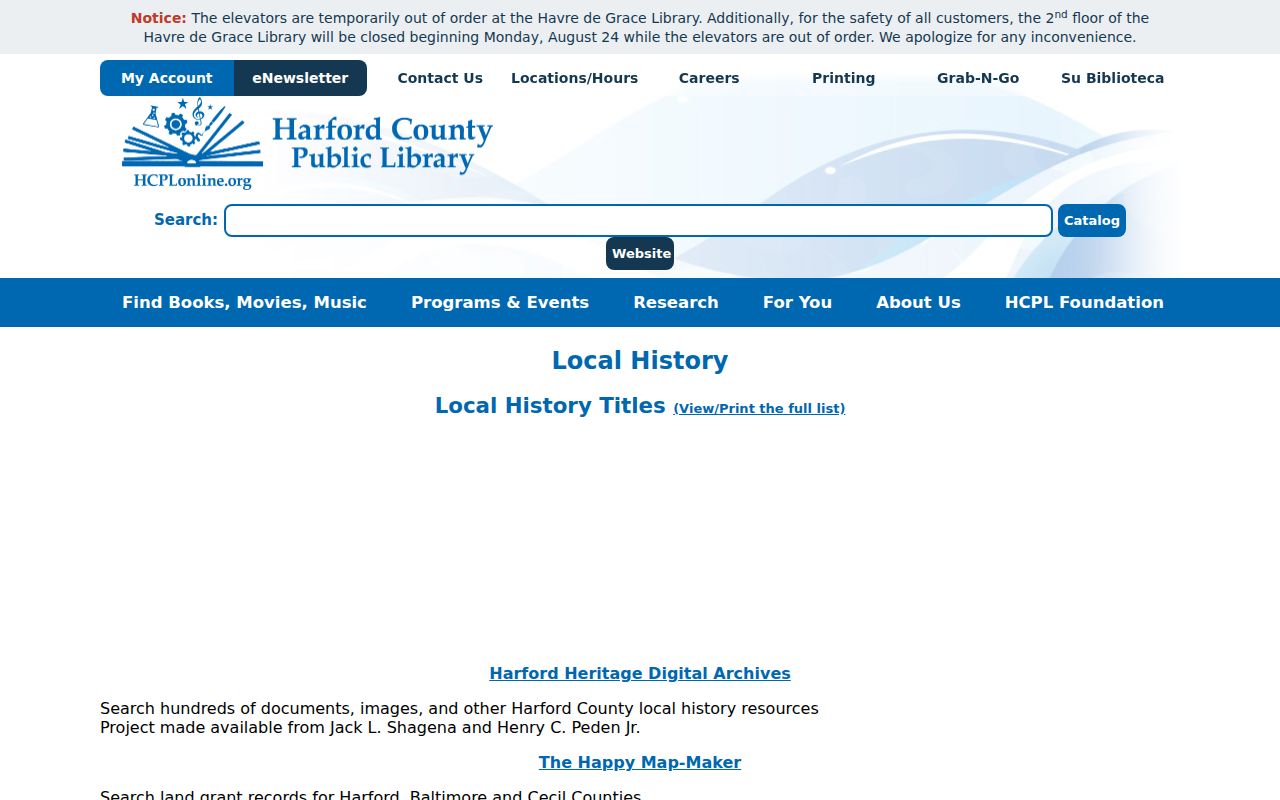
Start by using the gateway to pin down the right collection. Then ask staff about reading-room rules, the best branch, or a particular digitized item. HCPL also maintains the Harford Heritage Digital Archives. Oral-history material sits there too. Metadata and digitization vary by project.
Note: A catalog or digital-collection entry marks the source lead. The original image, volume, or reference copy supplies the evidence.
Reading an Edgewood City Directory Entry
Transcribe each entry exactly as printed, page header and publication date included. The Harford telephone pages omit features a full annual volume would carry. Even so, their layout is clear. It separates a person or organization name from the telephone and street or locality line. Check the front matter first. An abbreviation key helps too, when a volume includes one. Do the groundwork before expanding initials. Do it before claiming a household relationship. A city directory entry rewards restraint as much as curiosity.
| Page header and date | Identifies the directory issue and the historical moment of the listing. |
|---|---|
| Alphabetical heading | Shows the surname, given name or initials, or an organization as printed. |
| Telephone or locality line | Supplies the printed exchange or number and a street or locality reference where present. |
| Classified heading | Places an organization or service in the category selected by the publication. |
| Page or reel identifier | Lets the image be found again and checked against the catalog record. |
- Criss-cross directory
- An address-first directory that can list an owner, occupant, organization, or business for a printed date.
- Householder index
- An index arranged around the household name, when a volume supplies one, rather than a guarantee of every person at an address.
- Abbreviation key
- The volume’s own explanation of shortened words or symbols; preserve it before interpreting an entry.
HSHC Catalog Clues for Edgewood
Directory work in Edgewood often needs a companion source. The Harford County Historical Society PastPerfect catalog fills that role well. Its inventories hold court record books, cemetery records, and marriage series. They also include obituaries, surname files, map indexes, tax valuations, historical sites, and library vertical files. Searches return collection leads. The online catalog is still a work in progress. A hit does not mean every related item is digitized or cataloged online. For surname, map, newspaper, or vertical-file leads on Edgewood, the catalog view shown below offers a direct route. It is a straightforward collection search.
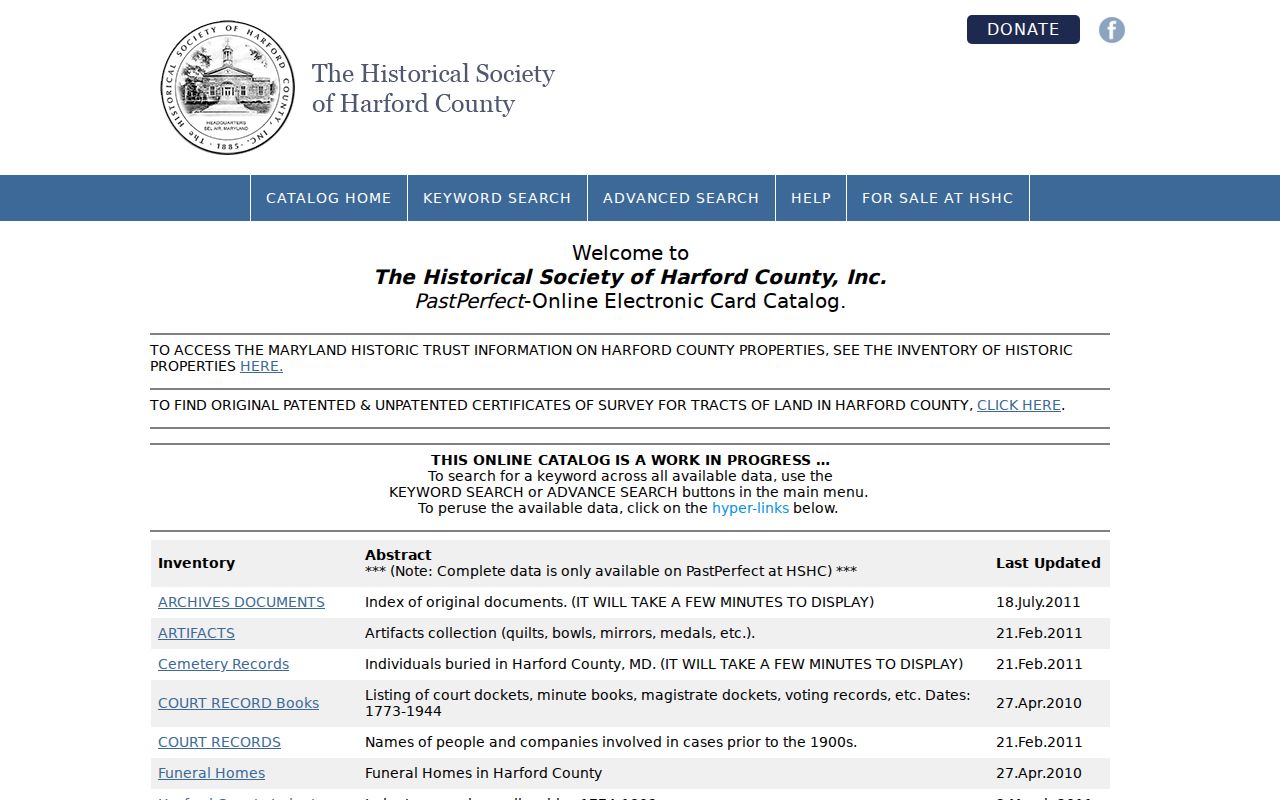
HSHC’s research-by-mail service accepts dates, locations, and family details. The basic option is prepaid and limited. Results are not guaranteed, so a focused question serves better than a broad surname request.
Tracing Families With Edgewood City Directories
Family history rewards sequence, not a single name hit. Start with one verified directory year and keep the full citation. Follow the same name into later and earlier volumes. Note changes without assuming why they occurred. Pair that year with the nearest census schedule, then test the link with a newspaper, land record, obituary, cemetery record, or local-history file. Gaps happen for many reasons. A move, a death, an unlisted number, or a changed locality label can each explain one.
- Choose the year and record type, such as telephone, criss-cross, newspaper, obituary, court, or local-history file.
- Locate the correct Edgewood page through the locality index or catalog description and record its date, page, reel, and label.
- Transcribe the printed name, organization, street or locality information without adding unprinted details.
- Compare the finding with the same-year newspaper, HSHC surname or vertical file, or another dated source.
- Use a census schedule and Maryland archival indexes to fill time between directory publications, keeping each source’s date separate.
HSHC’s online obituary inventory starts in September 2007. Its older cemetery, marriage, court, and surname holdings go deeper. A disappearance from a directory proves nothing. It is a prompt to check another source. It is not a conclusion that the person moved or died.
Note: Preserve the original image or catalog citation, because OCR can drop punctuation, initials, or the locality line that gives an entry its context.
Edgewood City Directory Gaps to Respect
The records tell a useful but uneven story. Land and court series at the Maryland State Archives reach far earlier than any telephone volume. Historical directory evidence, by contrast, clusters in selected county and regional publications. County newspapers add depth. Aegis and Harford County Intelligencer material from 1864 through 1922 supplies notices and organizational context. Keyword searches still depend on date, spelling, and imperfect OCR.
The Library of Congress lists no Edgewood Sanborn edition. Its official Harford results cover only Bel Air and Havre de Grace. That proves the map method but not an Edgewood map. Ask HCPL or a map reference desk first. Claim a local edition exists only after that check. The strongest Edgewood historical directory research names its source, year, access condition, and uncertainty plainly.